
The UAE R&D Tax Credit, live for tax periods starting on or after 1 January 2026, offers a non-refundable credit of up to 50 % on qualifying R&D expenditure of up to AED 5 million per period. Construction and civil-engineering work is inside the scope, but a construction contract, a Dubai Municipality permit, or a certified 3D-printing mix does not by itself establish R&D. This page shows where genuine technical uncertainty sits in construction, what evidence you will need, and where pre-approval fits.

The Ministerial Decision that implements the credit sets five criteria that a project must satisfy. Assessment is made having regard to the OECD Frascati Manual, and only the portion of a project carried out in the UAE counts. Social sciences, humanities and the arts are outside scope, a boundary that matters for architecture-driven work.
The five criteria in plain construction language
The project seeks new findings the industry does not already have. Unknown behaviour of a new mix design or connection detail counts. A building that is simply new to the client does not.
An original engineering hypothesis or design concept, not a choice from a supplier catalogue.
A competent engineer cannot predict the outcome or the method from established codes, published literature or supplier data. Uncertainty about cost, schedule or permitting does not count.
A dated test plan and budget, with controls, not ad-hoc site fixes.
The technical learning can be applied or replicated beyond one isolated site accident.
Each area below is an assessment direction, not a promise that the activity qualifies. Whether any specific project meets the five criteria and the entity, expenditure, ownership and pre-approval conditions is a fact-specific question.
The technical question is whether a mix retains pumpability and self-support at the site temperatures you actually work in, when the composition falls outside published printability envelopes. Assessment focuses on rheology testing, extrusion trials and instrumented full-height prints taken to failure, not on tuning inside a known envelope, and not on the plant certification process itself.
The unknown is long-term interface behaviour under Gulf curing conditions (fatigue, moisture cycling, carbonation) that 28-day permit tests do not predict. Standard grooving, wetting or slurry treatments are established practice; new interface techniques with an uncertain outcome are the R&D territory.
High-slag mixes are already established in UAE practice. Assessment sits with new combinations (alternative binders, geopolymers, calcined-clay systems) where durability under chloride and sulphate exposure cannot be predicted from existing data. A sustainability target or environmental product declaration is not evidence of technical uncertainty.
Where a load path or connection geometry falls outside code coverage, the work is characterised by analytical hypotheses tested against physical failure. Applying a proprietary tested connector, or designing to code with a generous factor of safety, does not qualify.
The technical question is whether sensing, control and end-effector accuracy hold up under real UAE site variables (dust, heat, vibration, wind, tolerance drift) beyond the manufacturer’s stated operating envelope. Deployment inside that envelope is routine operation, not R&D.
Coupled thermal, moisture and durability behaviour of novel or phase-change-integrated envelopes under Gulf climate is a genuine unknown when the assembly falls outside standard hygrothermal models. Standard compliance calculations against Dubai’s U-value calculator, or Al Sa’fat scoring, are not R&D by themselves.
Sabkha hydro-collapse, carbonate sands, high water tables, and novel deep-injection stabilisation techniques can all generate a predictive-model failure that standard site investigation cannot resolve. The line is between systematic experimental investigation and routine risk management using established methods.
Algorithm-level or model-level uncertainty (a toolpath algorithm that compensates for material deformation, a structural-health monitoring model whose accuracy cannot be guaranteed against physical failure) can sit inside construction R&D. Adopting BIM, clash-detection or a commercial digital-twin platform is not R&D.
Where tolerance build-up across modules, or joint performance under Gulf conditions, cannot be predicted from existing systems. First-in-firm use of an established modular system is not R&D: “novel” means new to the field.
Repair of interlayer defects and long-term structural interventions in printed elements is an area the industry itself flags as unresolved. Remedial method statements for a specific defect are routine; validated repair techniques with transferable outcomes are the assessment area.
Most construction activity is delivery, compliance and value engineering, not R&D. The routine boundary matters because pre-approval turns on it.
Complex, unique buildings designed within existing codes and analytical methods are engineering, not R&D. A discrete sub-problem inside the same project may still qualify as its own R&D project if the outcome cannot be predicted from established practice.
BIM implementation, clash detection, model coordination and adopting a commercial platform are business processes. Developing a new algorithm whose success is genuinely uncertain, with controlled validation against a physical benchmark, is a different question.
Regulatory activity, including submissions to Dubai Municipality, cannot itself be R&D. Permits may sit alongside an R&D project as context; they are not evidence of technical uncertainty.
Choosing a cheaper material that is already known to meet the load or performance requirement is commercial optimisation. The line moves only when material behaviour in the intended application is genuinely unknown and is tested systematically.
Dubai Municipality regulates 3D printing under Decree No. 24 of 2021 and Administrative Decision No. 217 of 2023, and it certifies plants producing 3D-printing concrete mixtures under the 3DCP Guideline (First Edition, June 2024). Certification confirms that a mix meets a known standard. It does not establish that the process of developing the mix involved scientific or technological uncertainty, and it does not substitute for pre-approval by the Emirates Research and Development Council. Earlier mixture-development work may be a separate assessable R&D project. That is a fact-specific question.
Execution of a known design, quality-conformity testing and site supervision are delivery. Where the contractor separately runs experiments to answer a stated technical hypothesis inside a planned project, and bears the cost of that experimental work, the position can change, but that requires a documented R&D project, not the contract itself.
Work driven by aesthetic form risks falling within the arts exclusion. The boundary between structural innovation and architectural expression is not settled in public guidance; specialist review is recommended before treating form-driven work as R&D.
The credit is tiered by qualifying expenditure and by the average number of R&D staff over the months in which R&D took place. Both thresholds must be met to reach each rate.
The three tiers of qualifying expenditure and staff
First AED 1,000,000
Minimum average R&D staff: 2
From AED 1,000,001 to AED 2,000,000
Minimum average R&D staff: 6
From AED 2,000,001 to AED 5,000,000
Minimum average R&D staff: 14
If your qualifying spend is above a band but your average R&D staff is below the corresponding threshold, the rate is adjusted down to the highest rate for which both tests are jointly satisfied.
See what your credit could be worth
Qualifying R&D expenditure has to be at least AED 500,000 per R&D project per relevant tax period, calculated before the staff-cost uplift. Small trials do not accumulate into a claim unless the project itself is defined and organised to that threshold.
Applying the three rates across the AED 5 million expenditure ceiling gives a maximum non-refundable credit of AED 2 million per qualifying entity or Tax Group per tax period (AED 150,000 + AED 350,000 + AED 1,500,000). Commentary that describes a “50 % credit up to AED 5 million” is describing the expenditure ceiling, not the credit ceiling.
Qualifying staff cost is uplifted by 30 % to account for overheads. R&D staff must be located in the UAE and under the claimant’s direction. Employee share options, and recharges to staff inside the same Tax Group, are excluded from qualifying staff cost.

Every R&D project for which the credit is claimed requires prior approval from the Emirates Research and Development Council. Pre-approval is a hard condition, not a procedural nicety: without it, an otherwise-qualifying project produces no credit.
Pre-approval is granted per project, in the form, manner and within the timeline that the Council specifies. The Council may require progress updates during the project.
Pre-approval is now live. Applications are submitted through TAWWER (tawwer.gov.ae), the Council’s platform: sign in with UAE PASS, request organisation access approved by your FTA-registered authorised signatory, and submit each R&D project separately. As at 27 October 2026, ERDC’s guidance is that each application is either Pre-Approved or Rejected, and a pre-approval can cover less than was applied for. ERDC may first issue a Request for Information, which must be answered within 20 business days; no fixed review time is published. Do not wait for tax-filing time: calendar-year 2026 companies must apply by 26 February 2027 (40 business days after 31 December 2026). Work already under way can be included if it was recorded as it happened.
The evidence pack a construction team can assemble now is the same evidence pack a TAWWER pre-approval application asks for:
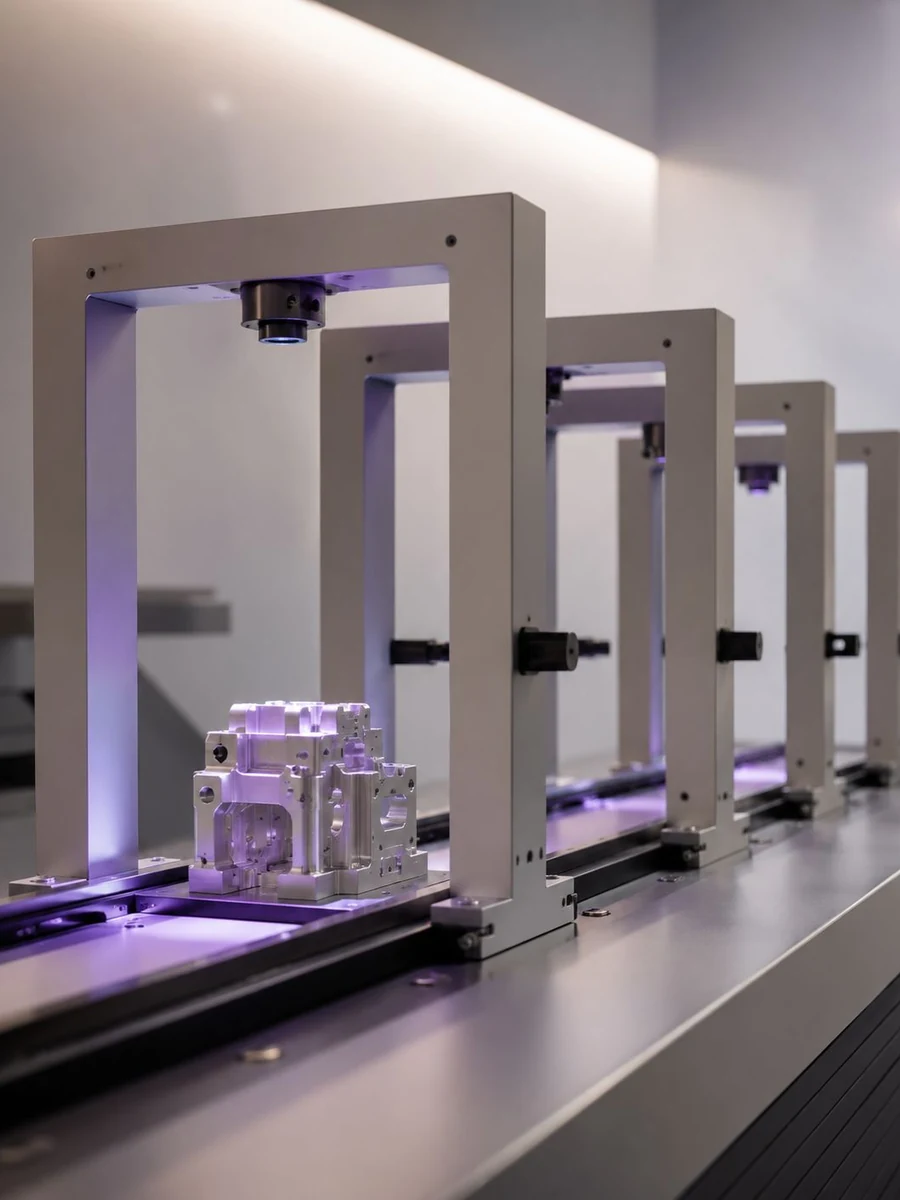
Records must be maintained for seven years and must include written, visual and electronic material: objectives, methodologies, experiments and findings. In construction, the visual layer matters: photographs of failed prints, rheometer curves, hot-box test outputs, strain-gauge traces and instrumented mock-up data are often the strongest evidence available.
Records should show:
what the technical uncertainty actually was, referenced against codes and published literature;
what was tested, in what sequence, with what controls;
what results were observed and how they compared to prediction;
what was iterated, and why.
No. Only discrete, planned work that resolves genuine technical uncertainty and receives Council pre-approval qualifies. Most site delivery, code-compliant design and value engineering is outside scope.
No. Dubai Municipality permits and 3D-printing plant certifications are conformity approvals under Decree No. 24 of 2021 and Administrative Decision No. 217 of 2023. R&D pre-approval is a separate requirement under the federal tax-credit framework.
Possibly. Contractor status by itself does not decide the question. The claimant needs to be the entity that meets the legal conditions on the R&D activity, including who bears the cost of the experimental work and who is entitled to the returns from the results. Contract and IP terms are decisive, and specialist review is recommended.
Consumables that are used up in the R&D activity are inside the qualifying cost categories. The treatment of trial materials that end up in a client-owned building is a fact-specific question and requires specialist tax review before it is relied on.
Capital plant is not a straightforward fit with the listed cost categories, which centre on staff, consumables, subcontracting, cost-sharing contributions and capitalised internally generated intangibles. This is a specialist review question rather than a settled answer.
Not as a qualifying subcontractor. Subcontracted R&D must be conducted in the UAE by a UAE-based subcontractor, with no further subcontracting down the chain.
An average of at least 6 R&D staff over the R&D months for 35 %, and at least 14 for 50 %. The spend threshold and the staff threshold both have to be met. Otherwise the rate adjusts down.
No. Phase 1 is non-refundable: the credit can be used against Corporate Tax and/or Top-up Tax liability, with a carry-forward available subject to ownership-continuity conditions.
Now. TAWWER is open and expenditure only qualifies from pre-approval onward, so every month before submission is potentially unclaimable spend. The evidence pack below carries straight into the application.
Seven years. Written, visual and electronic, including failed trials and iteration decisions.
Only if you are subject to 9 % Corporate Tax on the income derived from the R&D activity, or to Top-up Tax. Free-zone status alone does not determine eligibility, and a five-year claw-back applies if the entity later elects Qualifying Free Zone Person status.
If you are running a UAE construction, materials or building-systems project with real technical uncertainty, book a screening. We will work through the five criteria with your engineers, identify where the routine boundary sits for your work, and tell you what evidence pack you need to be ready for pre-approval.
R&D tax credits are all we do. Built in Manchester in 2017, AED 396M+ (£80M+) processed in UK claims. Now claiming for the UAE.
Expert insight on R&D tax credits, UAE compliance updates and innovation incentives, straight to your inbox.