
R&D tax credits for telecoms & space.
From national connectivity to a fast-growing space programme, UAE companies are working against hard physical limits. That development often qualifies for the R&D Tax Credit the discipline is proving precisely which part.
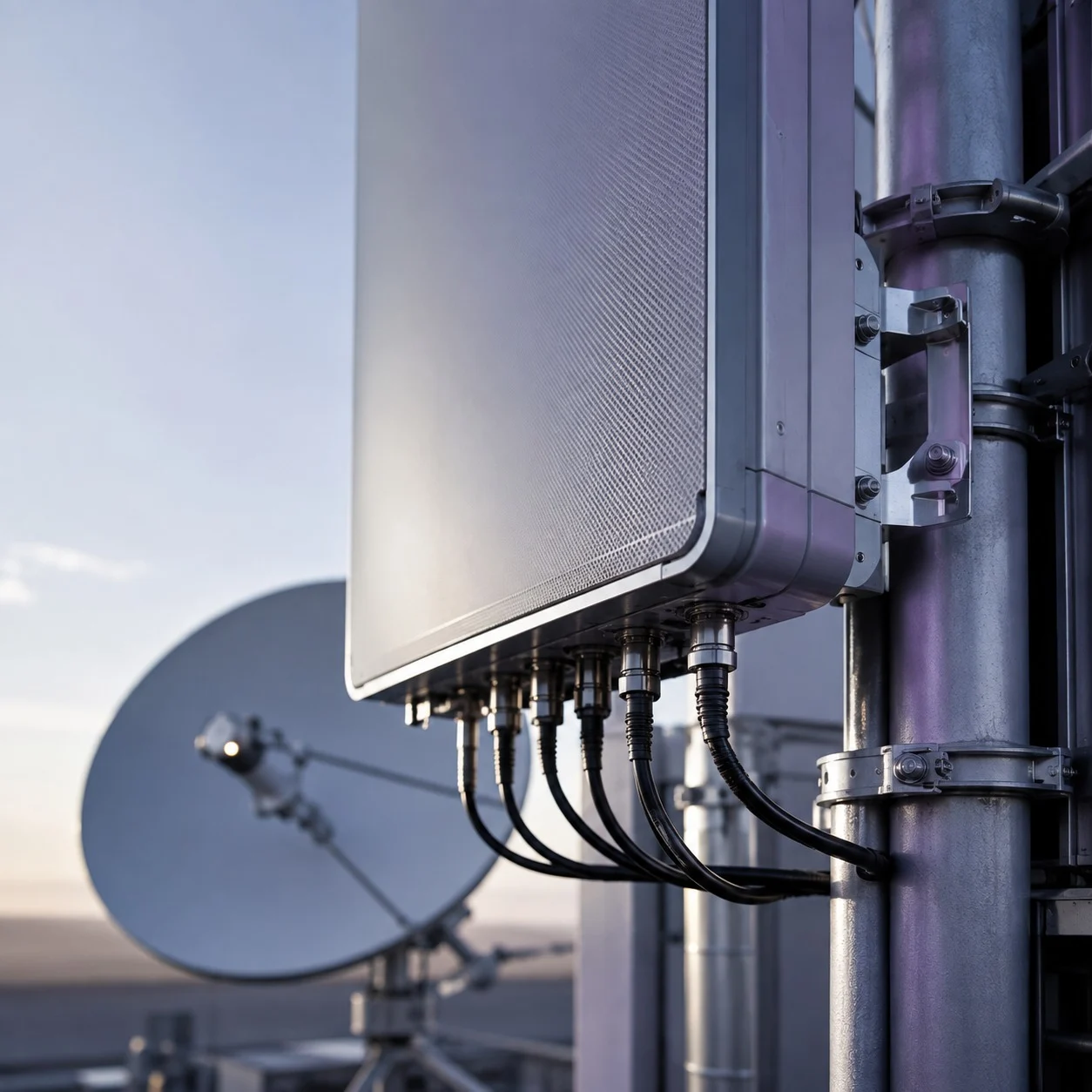
How qualifying R&D shows up in networks & space.
The UAE regime tests every project against the five OECD Frascati criteria. Here is what each looks like in a growing system, a water loop, or a supply chain.
Novel
A design or method not already available in the field.
Creative
Original engineering against physical limits, not known layout.
Uncertain
Whether physics and scale allow it is genuinely uncertain.
Systematic
Planned modelling and experimental validation, documented.
Transferable
Results reproducible across links and deployments.
The kind of work that qualifies.
Illustrative projects across upstream, downstream and the energy transition. Eligibility is always confirmed project by project.
RF & antenna design
RF or antenna design achieving coverage or capacity beyond current designs.
Low-latency 5G & edge
5G/edge architectures for a use case with no established pattern.
Satellite payloads
Payload, ground-station or link-optimisation work under hard physical limits.
Network optimisation
Routing, scheduling or spectrum methods that beat established approaches.
Space systems
Attitude, propulsion or comms subsystems engineered where the outcome is uncertain.
Resilient connectivity
Link resilience and recovery methods with no proven blueprint at the required scale.
Genuine R&D, not routine engineering.
The value we add is drawing this line correctly claiming what qualifies, and defending it, while leaving out what does not.
- Engineering against physical limits where the outcome is uncertain.
- Developing RF, network or payload designs with unknown performance.
- Modelling and experimental validation to resolve the uncertainty.
- Systematic iteration across designs and conditions.
- Deploying vendor network equipment to specification.
- Applying established RF or network design to a known case.
- Routine operations, monitoring and maintenance.
- Spectrum or commercial planning with no technical uncertainty.
AED 396M+
ICAEW Chartered Accountants, AED 396M+ (£80M+) in R&D incentives secured in the UK 1,300+ R&D claims processed (UK practice) – including 5G and network engineering, satellite systems and ground stations. The same chartered method now applies to the UAE.
“They are very competent, act swiftly and oversee the whole process. Their customer services are really helpful!”
Quantopticon deep-tech client
A UAE telecoms or space case study will feature here as claims complete under the new regime.
We deploy vendor 5G equipment. Can we claim?
Deployment to spec does not qualify. But where a use case imposed an uncertainty requiring new architecture, modelling and experimental validation, that development can qualify.
Does space hardware qualify?
Frequently – space systems routinely involve genuine technical uncertainty resolved through modelling and test, which is what the criteria reward. Each subsystem is assessed individually.
Is network optimisation eligible?
Applying established methods is not. Developing routing, scheduling or spectrum techniques that beat known approaches, where success is uncertain, can qualify.
What evidence will we need?
Contemporaneous records: the technical uncertainty, the work done to resolve it, and project-level cost and staff-time allocation. We build this as the work happens – and pre-approval is mandatory before claiming.
Working in connectivity or space? Let’s find what qualifies.
We assess your projects against the five criteria, handle pre-approval, and build the evidence before a single figure is claimed.