
R&D tax credits for advanced manufacturing.
Under Operation 300bn, the UAE is building a high-tech industrial base and process innovation is exactly what the R&D Tax Credit rewards. From robotics to new materials, much of that work qualifies. The discipline is proving precisely which part.
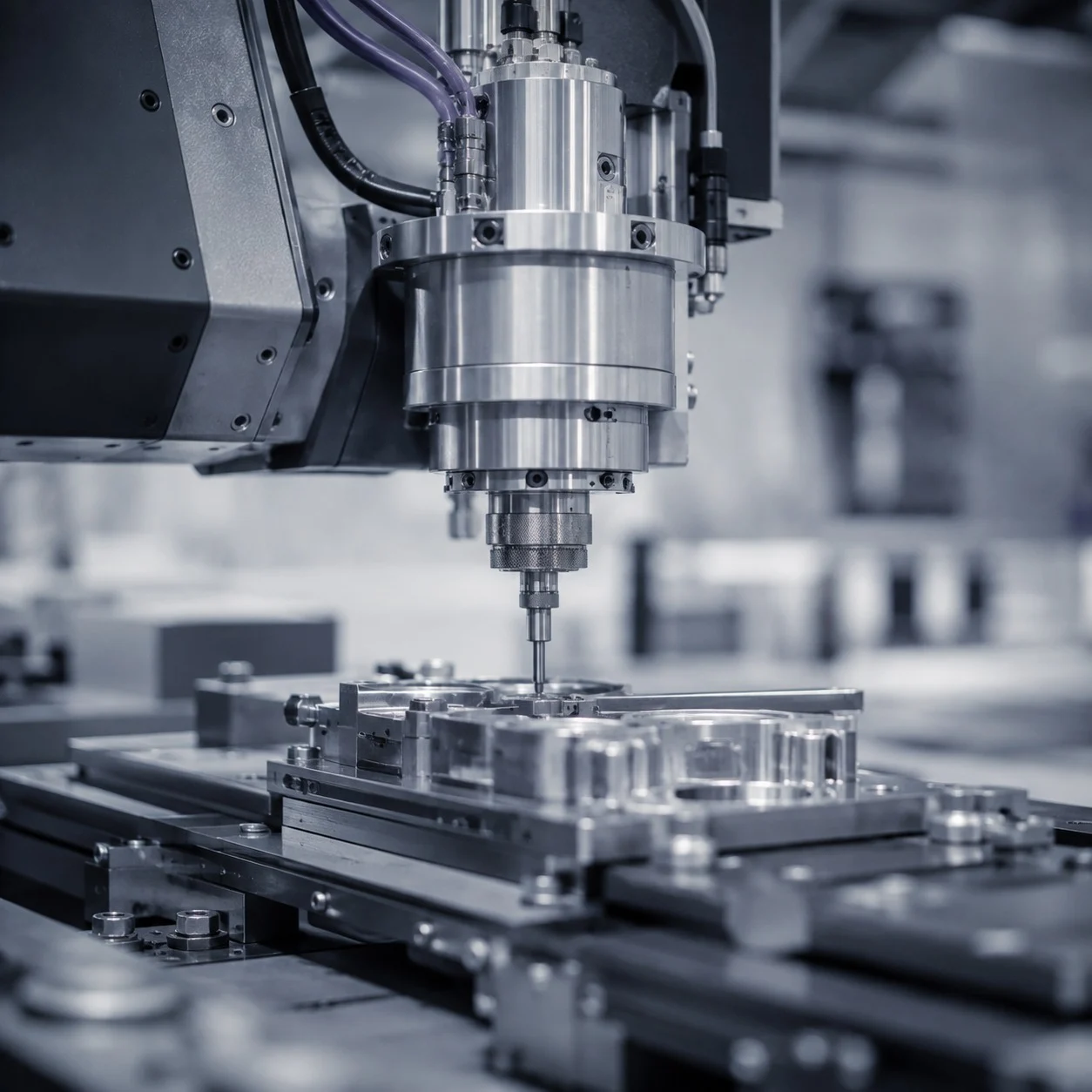
How qualifying R&D shows up on the factory floor.
The UAE regime tests every project against the five OECD Frascati criteria. Here is what each looks like on a line, in a cell, or in a new process.
Novel
A production process or method not already available.
Creative
Original process engineering, not routine commissioning.
Uncertain
Whether it reaches tolerance, yield or throughput is unknown.
Systematic
Planned trials and process iterations, documented.
Transferable
Results reproducible across runs and lines.
The kind of work that qualifies.
Illustrative projects across upstream, downstream and the energy transition. Eligibility is always confirmed project by project.
Production process development
A line achieving tolerance, yield or throughput no known process reaches.
Robotics & automation
Robotics or vision systems for tasks that resist standard automation.
Additive manufacturing
New materials or additive methods requiring iterative process development.
Materials engineering
Developing or adapting materials to perform where existing ones fail.
Inline quality & inspection
Inspection or quality methods achieving detection standard systems cannot.
Smart-factory integration
Integrating sensing and control to optimise a process in ways off-the-shelf systems cannot.
Genuine R&D, not routine engineering.
The value we add is drawing this line correctly claiming what qualifies, and defending it, while leaving out what does not.
- Developing or adapting production technology with uncertain outcomes.
- Process innovation to reach tolerance, yield or throughput not yet achievable.
- Robotics, materials or additive work requiring systematic trials.
- Iterative experimentation to prove the process at scale.
- Buying and commissioning standard equipment to specification.
- Applying an established, proven process to a new product.
- Routine production, tooling changes and maintenance.
- Capacity planning with no technical uncertainty.
AED 396M+
ICAEW Chartered Accountants, AED 396M+ (£80M+) in R&D incentives secured in the UK 1,300+ R&D claims processed (UK practice) – including process engineering, automation and new production methods. The same chartered method now applies to the UAE.
“A very small fee for a very big service. RDvault made the entire R&D claims process straightforward and stress-free.”
Avora – Client
A UAE manufacturing case study will feature here as claims complete under the new regime.
We bought new machines. Does that qualify?
Purchasing and commissioning standard equipment does not. But the process development around it – reaching a tolerance, yield or throughput that was genuinely uncertain – frequently does.
Is adapting an existing process eligible?
Often, yes. Where adapting a process to new materials, products or constraints posed a real technical uncertainty resolved through trials, that development can qualify.
Does automation count as R&D?
Deploying standard automation does not. Developing robotics or vision for tasks that resist standard automation, where success is uncertain, can qualify.
What evidence will we need?
Contemporaneous records: the technical uncertainty, the trials done to resolve it, and project-level cost and staff-time allocation. We build this as the work happens – and pre-approval is mandatory before claiming.
Making things here? Let’s find what qualifies.
We assess your projects against the five criteria, handle pre-approval, and build the evidence before a single figure is claimed.