
R&D tax credits for energy & climate.
As the UAE builds toward its net-zero commitments, companies are engineering renewables, storage and low-carbon materials for real conditions. That work often qualifies for the R&D Tax Credit the discipline is proving precisely which part.
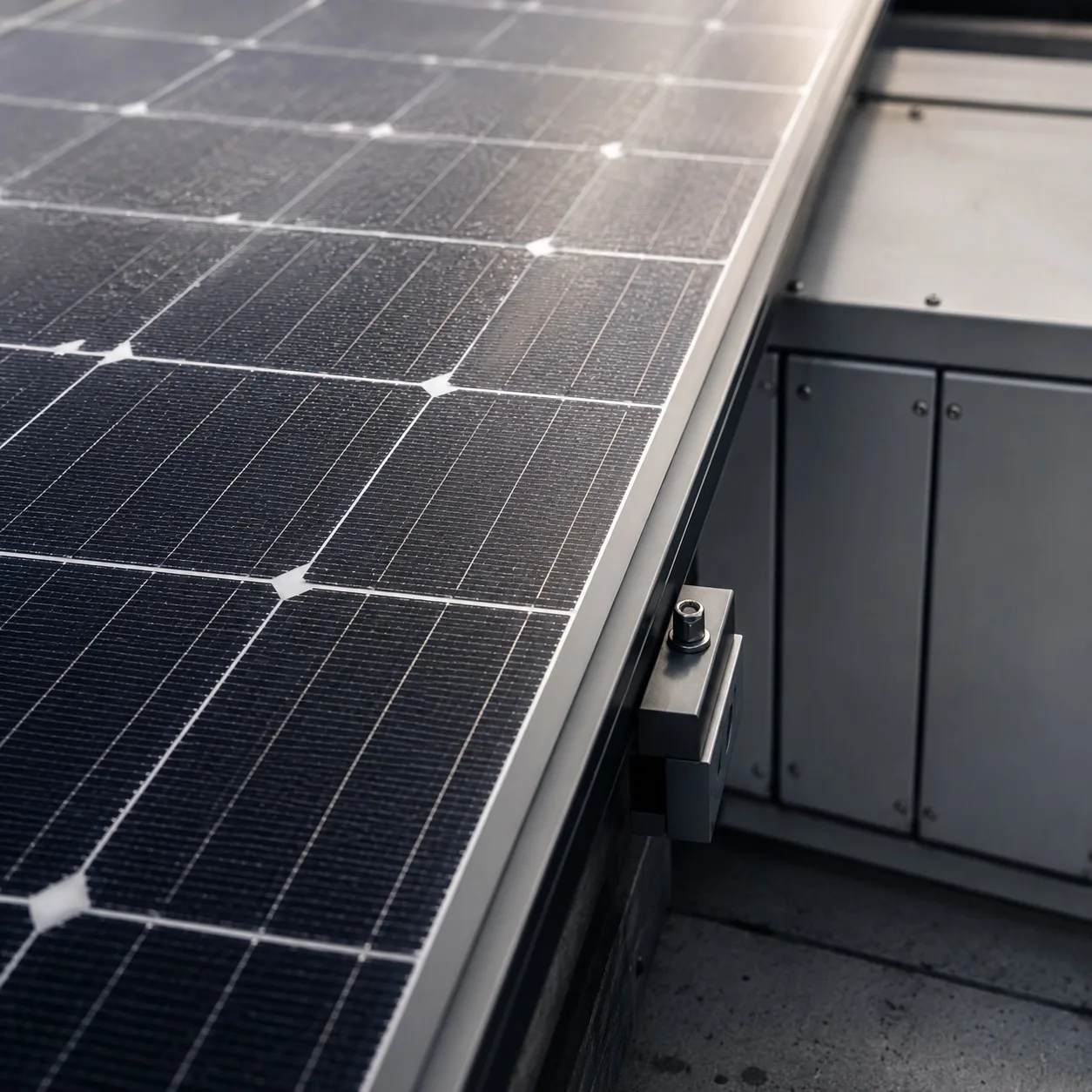
How qualifying R&D shows up on the factory floor.
The UAE regime tests every project against the five OECD Frascati criteria. Here is what each looks like on a line, in a cell, or in a new process.
Novel
A renewable, storage or material method not already available.
Creative
Original engineering, not routine deployment of known kit.
Uncertain
Whether it performs in real conditions is genuinely uncertain.
Systematic
Planned prototyping, modelling and field test, documented.
Transferable
Results reproducible across sites and conditions.
The kind of work that qualifies.
Illustrative projects across upstream, downstream and the energy transition. Eligibility is always confirmed project by project.
Solar for extreme conditions
Solar or storage systems engineered for the extreme-heat, high-dust conditions of the Gulf.
Battery & grid integration
Grid-integration or battery-management methods with no off-the-shelf answer.
Low-carbon materials
New materials or processes that measurably cut emissions or energy intensity.
Energy-water systems
Coupling renewables with desalination or cooling in ways not yet proven at scale.
Efficiency engineering
System-level efficiency gains requiring modelling and iterative test to achieve.
Carbon measurement & reduction
Methods to measure or reduce emissions beyond what current tools reliably deliver.
Genuine R&D, not routine engineering.
The value we add is drawing this line correctly claiming what qualifies, and defending it, while leaving out what does not.
- Engineering performance in real conditions where the outcome is uncertain.
- Prototyping renewables, storage or materials with unknown results.
- Developing integration or control methods with no established answer.
- Systematic modelling and field testing to resolve the uncertainty.
- Installing proven equipment to specification.
- Applying standard engineering to a known design.
- Feasibility or site studies with no technical uncertainty.
- Routine operations and maintenance of working systems.
AED396M+
ICAEW Chartered Accountants, AED 396M+ (£80M+) in R&D incentives secured in the UK 1,300+ R&D claims processed (UK practice) – including renewables, storage, hydrogen and low-carbon process work. The same chartered method now applies to the UAE.
“RDvault is a user-friendly solution that saved us countless hours on documentation and compliance.”
Voltaware – energy technology client
A UAE cleantech case study will feature here as claims complete under the new regime.
We install proven renewable kit. Can we claim?
Installation to spec does not qualify. But where adapting or integrating that kit for real conditions posed a genuine technical uncertainty resolved through prototyping and test, that development work can qualify.
Does sustainability work count if it is not new technology?
The criteria are about technological uncertainty, not novelty of intent. If achieving a measurable improvement required uncertain, experimental engineering, it can qualify.
Are pilots and demonstrators eligible?
Often, yes – pilots frequently exist precisely because performance at scale is uncertain, which is what the criteria reward. Each is assessed individually.
What evidence will we need?
Contemporaneous records: the technical uncertainty, the work done to resolve it, and project-level cost and staff-time allocation. We build this as the work happens – and pre-approval is mandatory before claiming.
Making things here? Let’s find what qualifies.
We assess your projects against the five criteria, handle pre-approval, and build the evidence before a single figure is claimed.