
R&D tax credits for agritech.
Food security is a UAE national priority, and growing in the desert demands genuine innovation. Some of that work can qualify for the R&D Tax Credit. The discipline is proving precisely which part.
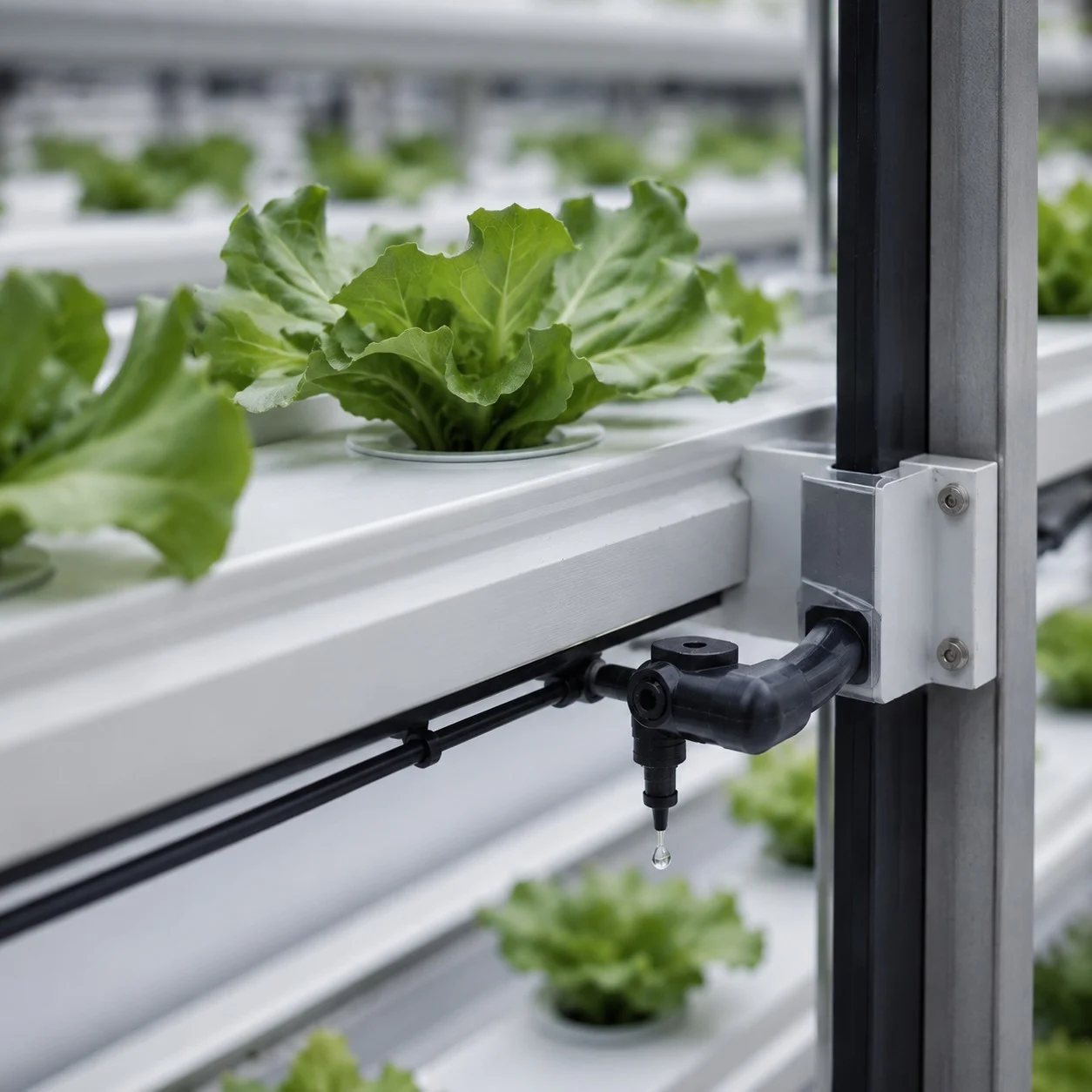
How qualifying R&D shows up in agriculture.
The UAE regime tests every project against five conditions in Ministerial Decision No. 24 of 2026, Article 3(1), assessed with regard to the OECD Frascati Manual. Here is what each looks like in a growing system, a water loop, or a supply chain.
Novel
A growing, water or food method not already available.
Creative
Original approaches, not routine operation of known systems.
Uncertain
Whether it works in an extreme environment is uncertain.
Systematic
Planned trials and measurement, properly documented.
Transferable
Results reproducible across cycles and sites.
The kind of work that qualifies.
Illustrative projects across controlled-environment farming, water efficiency and crop science. Eligibility is always confirmed project by project.
Controlled-environment agriculture
Vertical-farming or hydroponic systems engineered for yield in desert conditions.
Water efficiency
Water-use or desalination-linked methods that cut consumption beyond current practice.
Crop & cultivar science
Crop, substrate or lighting work validated where no proven solution exists.
Sensing & automation
Sensing and control systems optimising growth in ways off-the-shelf tools cannot.
Cold chain & supply
Storage or supply-chain methods that extend shelf life or cut loss beyond current practice.
Alternative proteins
Novel protein or food-production processes requiring iterative development.
Genuine R&D, not routine engineering.
The value we add is drawing this line correctly claiming what qualifies, and defending it, while leaving out what does not.
- Adapting agriculture to an extreme environment where the outcome is uncertain.
- Developing growing, water or food methods with unknown results.
- Systematic trials and measurement to resolve the uncertainty..
- Engineering yield or efficiency beyond current practice.
- Operating known growing systems to established practice.
- Applying proven methods without technical uncertainty.
- Routine farming operations and logistics.
- Market or feasibility studies with no technical uncertainty.
AED 396M+
ICAEW Chartered Accountants, AED 396M+ (£80M+) in R&D incentives secured in the UK 1,300+ R&D claims processed (UK practice) – including controlled-environment growing, crop science and farm automation. The same chartered method now applies to the UAE.
“A very small fee for a very big service. RDvault made the entire R&D claims process straightforward and stress-free.
Avora – Client
We are preparing UAE pre-approval submissions through TAWWER now. UAE outcomes will be published here as claims complete, subject to client consent.
AED 396M+
(£80M+) processed across 450+ UK companies – every claim defended through to settlement – including complex, engineering-heavy claims in energy and industrials. The same chartered method now applies to the UAE.
"A very small fee for a very big service. RDvault made the entire R&D claims process straightforward and stress-free"
Avora – client
We are preparing UAE pre-approval submissions through TAWWER now. UAE outcomes will be published here as claims complete, subject to client consent.
We run a vertical farm. Does operating it qualify?
Operating a known system does not. But developing or adapting the growing method for desert conditions, where yield or efficiency is genuinely uncertain, frequently does.
Is water-efficiency work eligible?
Often, yes. Where cutting consumption required uncertain, experimental engineering – not applying a proven method – it can qualify.
Does food-processing innovation count?
It can. Novel processes for shelf life, protein or safety, where the technical approach is uncertain and must be proven, may qualify.
What evidence will we need?
Contemporaneous records: the technical uncertainty, the trials done to resolve it, and project-level cost and staff-time allocation. We build this as the work happens – and Council pre-approval through the TAWWER platform is mandatory before claiming. Applications are submitted via TAWWER, accessed with UAE PASS and authorised by the signatory registered with the Federal Tax Authority. As at 27 October 2026, calendar-year 2026 companies must apply within 40 business days of 31 December 2026, which is 26 February 2027. Work already under way can be included if it was recorded as it happened.
Growing in the desert? Let’s find what qualifies.
We assess your projects against the five criteria, prepare and file your TAWWER pre-approval submission with the Council, and build the evidence before a single figure is claimed.